
Seatrec Names Johan Bergenas to Advisory Board
Seatrec Names Johan Bergenas to Advisory Board
Bergenas joins the board as a sustainability advisor bringing deep substantive, technology, and policy experience to boost Seatrec’s ocean data collection mission with their newly launched infiniTE™Float
VISTA, Calif. (Feb. 20, 2024) – Seatrec, a renewable energy company that harvests energy from temperature differences in the environment, today announces the appointment of Johan Bergenas to its Advisory Board as a sustainability advisor. Bergenas is the Senior Vice President of Oceans at the World Wildlife Fund and has served in several senior positions at the intersection of environmental policy, technology, and innovation.
“Johan brings a deep commitment to protecting the health of the oceans, as well as a wealth of experience in building and operating businesses that create positive change,” says Yi Chao, Ph.D., CEO and founder of Seatrec. “His insight and guidance will serve us well as we continue to expand the commercialization of our clean, renewable energy technology to significantly increase ocean data collection possibilities for scientific and commercial endeavors.”
Prior to Bergenas’ role overseeing World Wildlife Fund programs focused on ocean health, climate resilience, and environmental security, he worked at Paul Allen’s Vulcan developing, launching, and scaling science and technology programs worldwide. A former technology startup co-founder and CEO, Bergenas also led programming at the intersection of the environment, national security, and technology at the Stimson Center and the Monterey Institute.
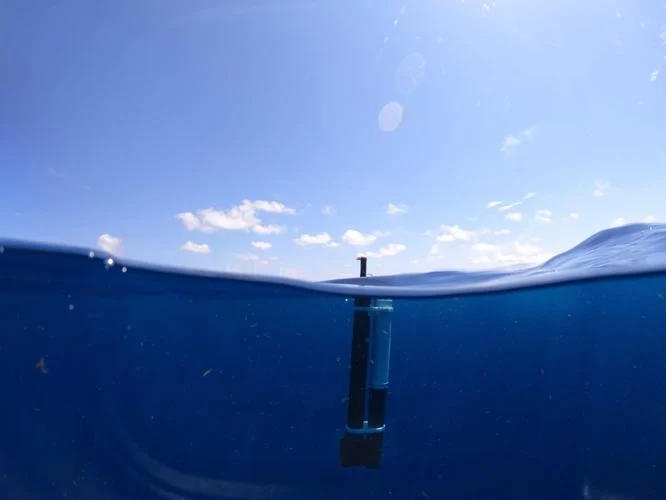
“The health of the world’s oceans is in crisis and we need new, innovative solutions to help better understand and protect the oceans while ensuring the livelihoods of those who depend on its bounty,” explains Bergenas. “Seatrec’s infiniTE™ float is the first subsea robot powered by clean and renewable energy. This sustainable float enables scientists to profile more frequently and integrate high power sensors to capture data previously impossible on existing solutions.”
Seatrec’s pioneering energy harvesting system uses phase change materials to harness energy from temperature differences between the ocean’s various depths. These materials contract and expand creating pressure that’s captured and converted into electricity. The clean, virtually limitless energy allows scientists to power autonomous vehicles and sensors away from shore without direct ship support.
The company recently won funding from NOAA to build an autonomous profiling float powered by the ocean’s temperature differences to study the underwater soundscape and announced a separate initiative in partnership with the University of Southern Mississippi to deploy floats in the Gulf of Mexico to improve hurricane forecasting and monitor the critically endangered Rice’s Whale. Last year, Seatrec announced the commercial launch of a first-of-its-kind modular platform that provides power to support “plug-and-play” sensor suites.
About Seatrec
Seatrec designs and manufactures energy harvesting systems that generate electricity from naturally occurring temperature differences in ocean waters. This renewable energy can be used to power deep water oceanographic research equipment such as floats, gliders, and autonomous underwater vehicles, resulting in the most scalable, cost-effective deep ocean data collection possible. Incorporated in 2016 by CEO, Dr. Yi Chao, Seatrec’s technology originated at NASA Jet Propulsion Laboratory, California Institute of Technology, to provide clean power for remote off-grid locations. The company is headquartered in Vista, CA. Visit us at www.seatrec.com and @seatrecinc.
Media Contact
Sean Yokomizo
Seatrec, Inc.
sean.yokomizo@seatrec.com
+1 925.878.1200
###

Oceanographic Team Wins NOAA Funding for Underwater Soundscape Study
Oceanographic Team Wins NOAA Funding for the Autonomous Profiling Float Powered by Ocean’s Temperature Differences to Study Underwater Soundscape
World-class experts from Seatrec, Integral Consulting, Naval Postgraduate School, MBARI, and Scripps/UC San Diego to build a long-endurance float for gathering directional acoustic data in the deep ocean powered by clean, renewable energy.
VISTA, Calif. – WEBWIRE – Wednesday, September 13, 2023
Seatrec, Integral Consulting, Monterey Bay Aquarium Research Institute (MBARI), Naval Postgraduate School, and Scripps Institution of Oceanography at the University of California San Diego today announce funding from the National Oceanic & Atmospheric Administration’s (NOAA) Ocean Exploration. The two-year funding award supports the integration of a commercial, off-the-shelf directional hydrophone manufactured by GeoSpectrum Technologies Inc. onto Seatrec’s newly launched infiniTE™ float to study the ocean’s soundscape.
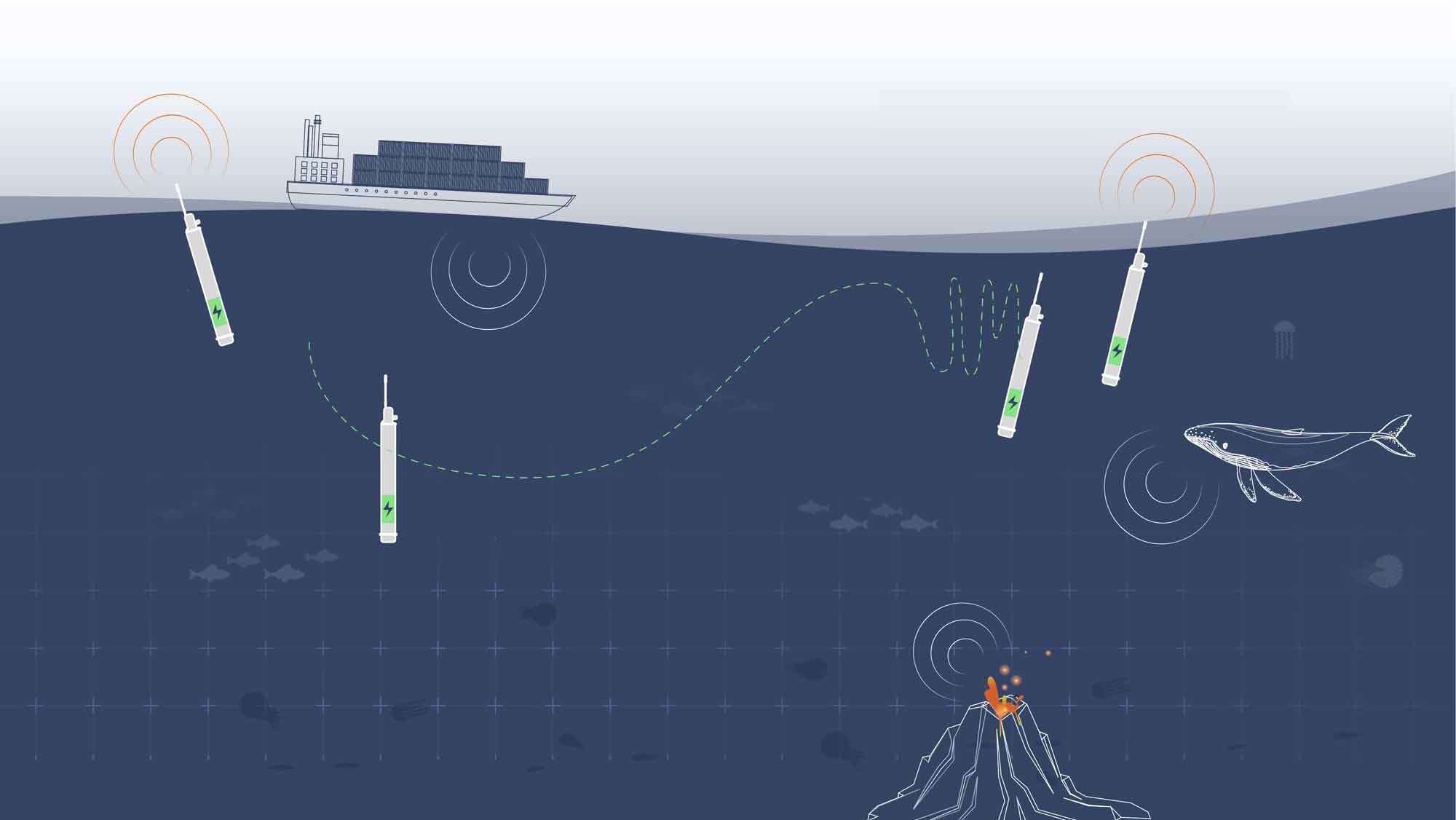
“Sound is a critical component to understanding the ocean, but the power demands of acoustic sensors make it impossible to listen for extended periods, not to mention the additional power required to process the acoustic data in order to reduce the data size for satellite communication,” points out Dr. Yi Chao, the Founder and CEO of Seatrec. “Seatrec’s newly launched infiniTE™ float, capable of generating electricity from temperature differences in the ocean, opens up vast new areas of knowledge to help us better understand and protect the ocean.”
Studies show that noise from humans adversely affects a broad range of organisms, from shellfish larvae to large marine mammals. Acoustic sensors, or hydrophones, are needed to quantify the impact of these noises; however, current technology limits their use to short deployments from expensive-to-operate ships or to areas where power is supplied via a cable from shore.
“A robust understanding of deep-sea acoustics is invaluable across a range of scientific, environmental, economic, and national security needs,” explains Dr. Kaus Raghukumar, an acoustic oceanographer at Integral Consulting. “The integration of a vector sensor into Seatrec’s profiler will leverage Integral’s NoiseSpotter® technology and expertise. A directional hydrophone allows for a better understanding of the location of sound sources, such as marine mammals.”
Seatrec’s infiniTE™ float provides a new platform for deep-water acoustic observations over unprecedented durations in remote regions.
“As part of NOAA Ocean Exploration’s mission to lead, coordinate, and fund expeditions around the world, we are uniquely situated to promote partners in the maritime community - like this creative team - who can advance ocean exploration technologies and acquire critical data and information about various marine environments,” said Jeremy Weirich, Director of NOAA Ocean Exploration. “Supporting this collaboration to develop and test an innovative sensor on a new underwater platform is important for filling data gaps about our ocean and enabling scientific discovery.”
About Seatrec
Seatrec designs and manufactures oceanic robots and energy harvesting platforms that generate electricity from naturally occurring temperature differences in ocean waters. This renewable energy can power oceanographic research equipment such as floats, gliders, and Autonomous Underwater Vehicles (AUVs), resulting in the most scalable, cost-effective deep ocean data collection possible. Seatrec originated at NASA’s Jet Propulsion Laboratory and the California Institute of Technology and was incorporated by CEO Dr. Yi Chao in 2016. Learn more about us at www.seatrec.com and follow us on @seatrecinc.
About Integral Consulting
Integral Consulting Inc. is a national science and engineering firm delivering technical solutions to complex environmental, health, economic, and natural resource challenges faced by our clients. We employ an unrelenting commitment to technical excellence, innovation, and collaboration to help our clients minimize yesterday’s impacts, comply with today’s demands, and plan for tomorrow’s needs. For information, visit www.integral-corp.com.
About NOAA Exploration Research
NOAA Ocean Exploration is dedicated to exploring the unknown ocean, unlocking its potential through scientific discovery, technological advancements, partnerships, and data delivery. We are leading national efforts to fill gaps in our basic understanding of the marine environment, providing critical ocean data, information, and awareness needed to strengthen the economy, health, and security of the United States and the world.
Media Contact
Sean Yokomizo
Seatrec, Inc.
sean.yokomizo@seatrec.com
+1 925.878.1200
###