Gulf of Mexico Ocean Monitoring: 160 Profiles in 49 Days

Gulf of Mexico Ocean Monitoring: 160 Profiles in 49 Days and Counting

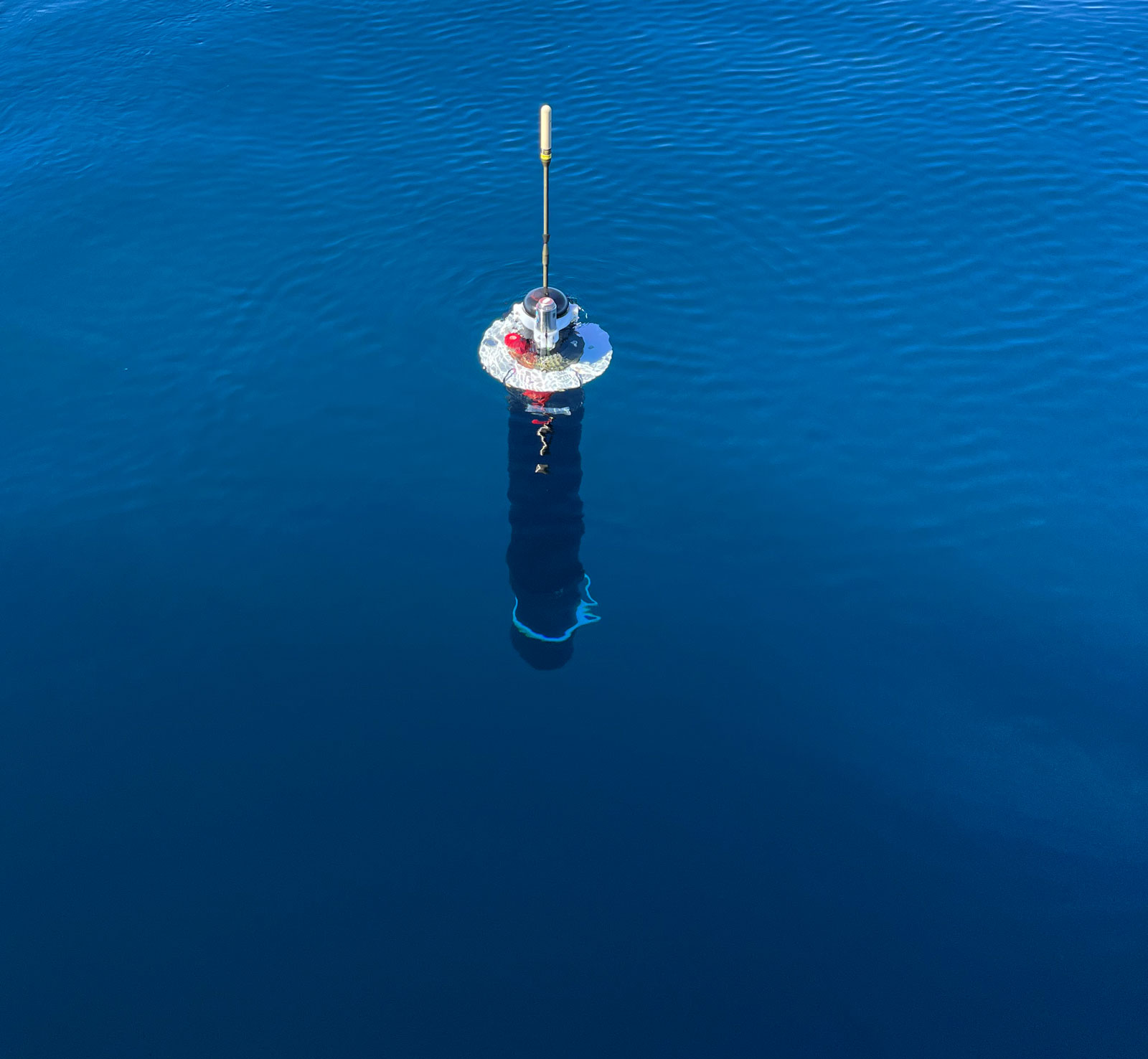
In just 49 days, Seatrec’s autonomous infiniTE™ float has successfully completed 160 profiles, powered entirely by the ocean’s temperature differences. Built for endurance, the float continues to dive, surface, and transmit real-time data without a single battery swap.  This proves how thermal energy harvesting enables truly persistent ocean monitoring in one of the world’s most dynamic marine environments.

Mission Success in the Gulf

Deployed in the northeastern Gulf, south of Destin, Florida, the float has been transmitting continuous data below the surface. This information provides critical insight for understanding this region.

By the Numbers

  • Profiles: 160 reaching depths of up to 800 meters
  • Energy: 1.241 megajoules of thermal energy generated from the ocean
  • Data: Real-time data transmitted after each surfacing
  • Trajectory: Drifted hundreds of kilometers to the southwest

What the Float Does

infiniTE™ Float dashboard view of select data.

Every eight hours, the float collects CTD and acoustic data, surfaces, and transmits results.

  • CTD sensor: Measures conductivity (salinity), temperature, and depth—revealing how heat and water masses
    layer beneath the surface. These are key inputs for ocean and climate models.
  • Hydrophone: Records underwater soundscapes, with onboard processing of the recorded data to reduce file size for real-time transmission via satellite.

All of this is powered by Seatrec’s patented thermal energy harvesting system, which converts the temperature differences between surface and deep water into electricity.

Power Generation: Seatrec’s patented technology uses phase-change materials (PCMs) that transition from solid to liquid (SL).  When PCMs experience temperature changes, they undergo a phase transition and change volume. This volume change drives a motor through pressurized fluid, converting hydraulic energy into electricity. During the warming phase (left), the contained working substance changes from solid to liquid, expands, and generates pressure that forces hydraulic oil through a generator to produce electrical energy. During the cooling phase (right), the working substance freezes and contracts.

Record Atlantic Hurricane Season, Quiet Gulf Waters, But Much to Listen to

The 2025 Atlantic hurricane season has been one of the most active on record, with 13 named storms, four major hurricanes, and three Category 5 systems. Hurricane Melissa became one of the strongest Atlantic hurricanes ever recorded.

Yet the Gulf of Mexico has remained unusually quiet. While our float hasn’t yet profiled Gulf waters during an active hurricane,  it is building the baseline subsurface thermal data that forecasters need before the next storm forms.

The Rapid Intensification Challenge

This year underscored a growing forecasting challenge: rapid intensification — the explosive strengthening of storms fueled by ocean heat. Three Category 5 hurricanes formed this season, each undergoing rapid strengthening that caught forecasters and communities off guard.

Hurricane Melissa exemplified this trend. According to National Hurricane Center advisories, Melissa intensified from a tropical storm to a 140 mph Category 4 in roughly 24 hours, then continued to 175 mph Category 5 strength with a minimum pressure of 906 millibars, making landfall in Jamaica as one of the strongest Atlantic hurricanes ever recorded.  Hurricanes Erin and Humberto also showed similar surges, driven by ocean heat content.

Ocean Heat: The Hidden Fuel

Rapid intensification requires specific conditions:

  • High humidity
  • Low wind shear
  • Deep pools of warm water

It is not just surface temperature that matters; it is how deep that warmth extends. A hurricane moving over high ocean heat content taps into a massive energy reservoir, enabling the explosive strengthening that makes these storms so dangerous.

Why This Float’s Data Matters

Understanding where and when these pools of warm water exist is essential for forecasting rapid intensification.  Traditional ship-based surveys cannot provide continuous coverage, and satellites only measure surface temperature. That is where autonomous floats like Seatrec’s become invaluable. Profiling temperature and salinity to 800 meters every eight hours, our infiniTE™ float maps the three-dimensional heat structure of the Gulf — the hidden energy that fuels storms.

These data will help researchers:

  • Identify regions of high ocean heat content where rapid intensification is most likely
  • Understand seasonal and interannual variability in Gulf heat content
  • Validate and improve hurricane forecast models

As forecasters aim to improve rapid-intensification predictions by even 5–7 percent, this type of continuous data collection will be essential.

Partner With Us

Whether major storms arrive this year or not, Seatrec is delivering on its promise: autonomous, self-powered ocean monitoring that provides continuous data for better forecasts, deeper understanding, and more effective conservation.

We are always seeking collaborators interested in:

  • Hurricane rapid-intensification research
  • Gulf soundscape ecology and marine-mammal behavior
  • Long-duration autonomous sensing in the region

Interested in accessing data or deploying similar technology for your research? Contact us at info@seatrec.com.


First Hydrophone-Equipped Float Deployed in the Gulf of Mexico

Advancing hurricane forecasts and protecting Rice’s whales

Last week, we deployed our latest infiniTE™ Float off the coast of Florida—the first of its kind in the Gulf of Mexico to carry both a CTD sensor and a hydrophone (an underwater microphone). A CTD sensor measures conductivity (to calculate salinity), temperature, and depth, providing a detailed view of how warm water is distributed below the surface. That subsurface heat can fuel hurricanes to strengthen quickly. Satellites capture only surface conditions, but they cannot detect the deeper layers of warm water linked to rapid intensification. As tropical storms approach the Gulf, the float will profile subsurface layers every six hours, providing data to help improve intensity forecasts. At the same time, the hydrophone will collect acoustic information for soundscape monitoring to support marine conservation, particularly for the critically endangered Rice's whales.


Building on success in Hawai'i and expanding partnerships

This summer, our Persistent Smart Acoustic Profiler (PSAP)—a SEATREC infiniTE™ Float developed in collaboration with the Naval Postgraduate School (NPS)—reached a milestone of 1,000 dives to depths of 700 meters.

Launched off the coast of Kona, Hawai‘i in November 2024, the PSAP carried a CTD sensor and a passive acoustic hydrophone, processed data onboard, and transmitted results in real time. Powered entirely by SEATREC’s patented thermal energy harvesting system, it generated more electricity than it consumed, harvesting over 10 megajoules (2,800 Wh) in just seven months—more than twice the energy of a conventional battery-powered float.

NPS’s interest in this effort was clear. Persistent, real-time ocean intelligence is critical for missions such as undersea warfare and maritime domain awareness, and the PSAP platform demonstrated that it could deliver both oceanographic and acoustic data without relying on external assets. It also provided valuable datasets for METOC program students, linking applied research with Navy readiness.

The success of PSAP in Hawai‘i validated the endurance and self-powering capability of the platform. It also proved that long-term, multi-sensor ocean monitoring is achievable. With that foundation in place, our next step was to expand the mission into the Gulf of Mexico, where hurricane intensification and the habitat of the Rice’s whales present urgent challenges for science, conservation, and coastal resilience


What makes this float different

Seatrec Team Members Michael Zedelmair and Josh Laney prepare for launch.

Building on the PSAP's design, this infiniTE™ Float carries a suite of sensors and capabilities tailored to both hurricane forecasting and marine life monitoring:

  • CTD sensor — measures conductivity (salinity), temperature, and depth to profile ocean conditions throughout hurricane season
  • Hydrophone with onboard processing — captures and analyzes underwater soundscapes in near real time
  • Remote reconfiguration — allows the system to focus on detecting Rice’s whale vocalizations for targeted acoustic tracking within their federally designated critical habitat in the Gulf of Mexico.

Diving deep, surfacing more frequently

Real-Time Dive Data: Temperature, Salinity, and Density Profiles 

Every six hours, the float dives to as deep as 800 meters, collects data, and resurfaces to transmit a snapshot of the ocean’s physical state. The data reveal how warm water is layered below the surface—conditions linked to rapid hurricane intensification. Each profile adds new observations of the Gulf’s subsurface and provides inputs that forecasters can use in intensity models.


Why it matters

This mission bridges science, technology, and conservation:

  • For coastal communities: better hurricane forecasts and more lead time to prepare.
  • For researchers: more oceanographic data that deepens understanding of ocean-atmosphere interactions.
  • For marine life: acoustic monitoring that supports conservation of critically endangered species such as Rice’s whales.

SEATREC’s vision is to harvest the ocean’s natural energy gradients to power smarter, longer-lasting ocean drones and power systems. This deployment in the Gulf is another step toward that future


Follow along

We’ll be sharing more from this mission as the float continues its journey. Stay tuned as real-time ocean data shape the way we forecast hurricanes and protect marine life.


Seatrec and The USM Team to Improve Hurricane Forecasting and Monitor Critically Endangered Rice’s Whale

VISTA, Calif. – WEBWIRE – Wednesday, May 17, 2023.  Seatrec, a startup company unlocking clean, renewable power for ocean research and commerce, and the Roger F. Wicker Center for Ocean Enterprise at The University of Southern Mississippi (USM), today announce the signing of a memorandum of understanding (MOU) aimed at improving hurricane rapid-intensification forecasting and monitoring critically endangered Rice’s whales in the Gulf of Mexico.

The MOU calls for the deployment of two types of Seatrec’s infiniTE™ floats each customized for different missions using the system’s first-of-its-kind modular design and clean, renewable power technology that harvests electricity from the ocean’s temperature differences.

One type of float will feature a suite of instruments to take measurements as frequently as three times per day to track water temperatures and other data that scientists believe contribute to the rapid intensification of hurricanes like Katrina, Irma, and Ian. The second type of float will operate with a passive acoustic hydrophone to monitor the endangered Rice’s whales with less than 100 remaining members of the species clustered in the Gulf’s northeastern waters.

“There is a critical need to better understand the Gulf of Mexico both in terms of its impact on humans in the form of extreme weather events and human impact on the marine life,” points out Yi Chao, Ph.D., the CEO and founder of Seatrec. “Having the flexibility to quickly and inexpensively deploy different mission-specific instrument suites on deep-diving, autonomous floats powered by a clean, renewable power source gives scientists like those at USM important tools to gather data not possible with previous technologies.”

Rice’s whales are members of the baleen whale family Balaenopteridae. With likely fewer than 100 individuals remaining, Rice’s whales are one of the most endangered whales in the world. Recovery of the species depends upon the protection of each remaining whale.

The MOU follows Seatrec’s completion of the six-month Gulf Blue Navigator program that is administered by USM and SeaAhead with partners, including Jackson State University. The program is designed to help scale blue technology startups.

“Power has long been a limiting factor that often restricts the types of instruments deployed in the ocean, how long they can last, and the amount of persistent data they can collect,” explains Dr. Kelly Lucas, USM’s Vice President for Research. “Seatrec’s ability to provide clean, renewable power to vertically integrated and modular instrument suites opens the door to a host of applications that will help us better understand and protect the ocean.”

Added Hailey Bathurst, Program Manager for the Gulf Blue Navigator, “Seatrec exemplifies what the Navigator program is meant to do: help blue tech startups find traction in the Gulf of Mexico, work with the core facilities at USM, and plug into a supportive ecosystem. This MOU and the others being finalized between USM and the inaugural Gulf Blue Navigator cohort members truly represents the potential of the program.”

The Roger F. Wicker Center for Ocean Enterprise serves a global hub for advancing Uncrewed Maritime Systems, ocean data science, maritime cyber research, and blue tech workforce training. The 62,500-square-foot center consists of multiple facilities bringing together federal, industry, and academic partners, creating a collaborative environment to accelerate the development and launch of new technology in the fast-growing ocean economy.

Entrepreneurs and startups developing solutions to global challenges utilize the center to capitalize on world-class ocean research capabilities and connect to university research scientists.

“The Gulf Blue Navigator program has already begun to make an economic impact to the Mississippi Gulf Coast,” said Dr. Jason McKenna, Director of Research, Development, Testing, Evaluation & Training at the Wicker Center. “This is the first of many follow-on initiatives between USM’s world-class research centers and the Navigator’s program’s first graduating cohorts and demonstrates the ability of our coastal research ecosystem to partner with and help grow blue technology in Mississippi.”

Seatrec’s pioneering energy harvesting system uses phase change materials to harness energy from temperature differences between the ocean’s various depths. These materials contract and expand creating pressure that’s captured and converted into electricity. The clean, virtually limitless power frees scientists to use sensors that typically require shore-supplied power or direct ship support via tethering. The infiniTE™ float platform’s “plug-and-play” modularity vertically integrates different sensors tailored to particular areas of study.


Hurricane Forecasting
Better understanding the rapid intensification of major storms and hurricanes is a particularly pressing goal as annual economic losses from such storms are estimated at $54B. Traditional floats (commonly known as Argo) typically only profile once every 10 days, which is insufficient to measure the intensification of storms that can surge in as little as 24 hours. Seatrec’s infiniTE™ floats are able to sample as frequently as three times per day providing 30x more data than the standard Argo floats.


Whale Monitoring
Studies show that noise from humans adversely affects a broad range of organisms including marine mammals. Hydrophones are needed to quantify the impact of these noises on marine mammals. Hydrophones mounted on Seatrec’s infiniTE™ floats provide an inexpensive, autonomous platform to gather soundscape data at varying depths for years at a time.

Seatrec will establish a long-term presence in the Gulf of Mexico to support the MOU missions with a satellite office provided by the Gulf Blue Navigator program while its headquarters will remain in Vista, California.


About Seatrec
Seatrec designs and manufactures energy harvesting systems that generate electricity from naturally occurring temperature differences in ocean waters. This renewable energy can be used to power deep water oceanographic research equipment such as floats, gliders, and Autonomous Underwater Vehicles (AUVs), resulting in the most scalable, cost-effective deep ocean data collection possible. Incorporated in 2016 by CEO, Dr. Yi Chao, Seatrec’s technology originated at NASA Jet Propulsion Laboratory, California Institute of Technology, to provide clean power for remote off-grid locations. The company is headquartered in Vista, CA. Visit us at www.seatrec.com and @seatrecinc.

About The University of Southern Mississippi
The University of Southern Mississippi (USM) is a comprehensive public research institution delivering transformative programs on campuses in Hattiesburg and Long Beach, at teaching and research sites across the Mississippi Gulf Coast, as well as online. Founded in 1910, USM is one of only 146 universities in the nation to earn the Carnegie Classification of Institutions of Higher Education’s "R1: Doctoral Universities – Very high research activity” designation and its robust research enterprise includes experts in ocean science and engineering, polymer science and engineering, and large event venue safety and security, among others. USM is also one of only 36 institutions in the nation accredited in theatre, art and design, dance and music. As an economic driver, USM generates an annual economic impact of more than $663 million across the state. USM welcomes a diverse student body of more than 13,500, representing more than 70 countries, all 50 states, and every county in Mississippi. USM students have collected four Truman Scholarships and 37 National Science Foundation Graduate Research Fellowships, while also leading Mississippi with 27 Goldwater Scholarships, an honor that recognizes the next generation of great research scientists. Home to the Golden Eagles, USM competes in 17 Division I sports sponsored by the National Collegiate Athletic Association (NCAA). For more information, visit usm.edu.


Contact Information:

Sean Yokomizo
Media Relations/Communications
Seatrec, Inc.
925.878.1200
sean.yokomizo@seatrec.com

Here is the official press release.


Sign up for our newsletter

Get the latest Seatrec news and updates.

Sign up for our newsletter

Get the latest Seatrec news and updates.

Contact Details


Seatrec HQ
1340 Specialty Dr., Suite I
Vista, CA 92081

Seatrec Satellite Office
Gulf & Ship Island Building
2605 13th Street
Gulfport, MS 39501

+1 626 386 5988
www.seatrec.com
info@seatrec.com

Privacy Preference Center